|
The following is an extract from an article considering the probability of life evolving spontaneously,
"Information theory scientist Professor Hubert Yockey calculated and MIT biologist Robert Sawer
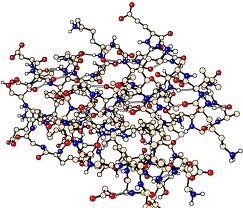
confirmed that the probability that a protein containing just 100 amino acids would form
spontaneously is less than one chance in 10
65 (a 1 with 65 zeros after it ...).
Ignoring the above statistical odds and assuming the protein could have formed in a toxic
environment, the new protein would then need the incredibly more complex programming for
replication.
The next problem is that the formation of a protein does not constitute the formation of a living cell
with a cell membrane which isolates the bare amino acids against their environment which will
indeed destroy any one, if not all of the molecules of the complex chain.
Another problem is that for all of these processes to occur require energy. The final problem is that
of the complex progression of mutations that must occur for the protein to develop the necessary
structures and programming to facilitate reliable reproduction.
Even if proteins formed, you're still not close to producing life - the simplest cells require thousands
of specialised proteins in order to function."
Sir Fred Hoyle, British Astronomer, estimated the probability that the proteins of an amoeba arose by
chance as 1 in 1040,000, which is a ridiculously small number. To put that into context, the chance of
you correctly selecting a particular atom from the entire Universe on your first attempt is estimated at
1 in 1080.
Hoyle compared the random emergence of even the simplest cell to the likelihood that
"a tornado sweeping through a junk-yard might assemble a Boeing 747 from the materials therein."
After this discovery, Hoyle stated, "it is enough to bury Darwin and the whole theory of evolution.
There was no primeval soup neither on this planet nor any other, and if the beginnings of life were not
random they must therefore have been the product of purposeful intelligence".
Richard Dawkins
and others have tried to dispute Hoyle's calculations. Any estimates require certain
assumptions to be made. However, Mathematicians generally agree that any probability that is less
than 1 in 1050 is considered to be an impossibility. The probability of life forming spontaneously in a
form that can replicate far exceeds this even based on conservative assumptions, so it is therefore
essentially of zero probability.
Does God play dice?
Albert Einstein stated, "I, at any rate, am convinced that He does not throw dice"
If God did play dice, he would win every time.
Proverbs 16 : 33 "The lot is cast into the lap, but its every decision is from the LORD."
|

 Previous
Next
Previous
Next